I Didn't Understand 9/11 Until I Was Standing Inside the Impact Site
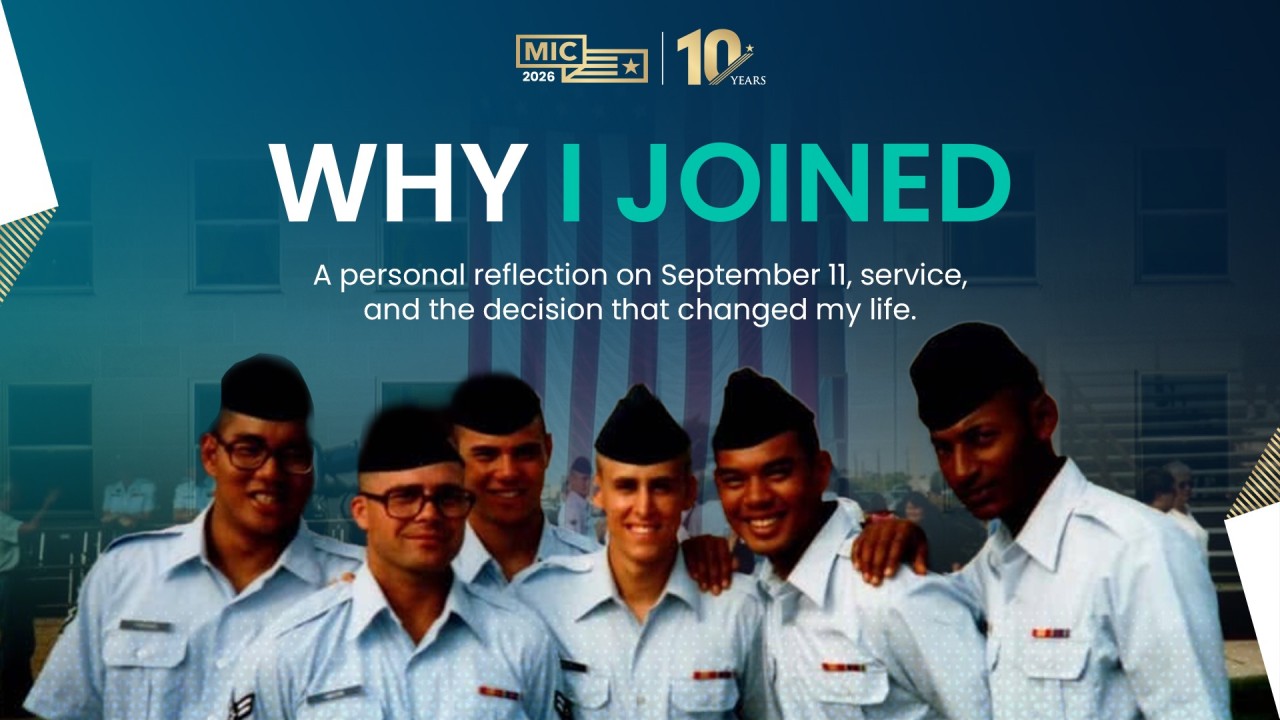
I was sixteen, I thought the teachers were overreacting, and it took most of a career to catch up to what I had watched.
I was in eleventh grade at Westlake High School in Waldorf, Maryland, and the first thing I actually remember about September 11th is not the towers. It's the televisions.
You remember those big box TVs on the metal carts with the wheels? Every teacher on our hall started rolling them out at the same time, and it was the teachers who got my attention rather than anything on the screen. They seemed…concerned. For a few minutes they stopped being teachers and felt like our peers that day, finding out at the same speed we were.
And then I watched the first tower burning on that screen and decided, with complete sixteen-year-old confidence, that everybody was overreacting.
I genuinely thought it was an accident, because the alternative had never once entered my head. I was naive to what evil actually exists in the world, to what a person is willing to do to a complete stranger they will never meet, and nothing in my average small-town life had given me a reason to think otherwise. So I sat there and figured the adults were being dramatic.
Then the second plane hit, and the TVs were already out, and every one of us saw it at the same time.
There was no room left to be wrong about it. I remember teachers with tears running down their faces, hands over their mouths, shaking. Classes stopped. Every room in that building had a crowd of kids pressed around a television, and the whole school went electric in a way I have never felt anywhere since. Underneath all that noise was something new, which was the safety coming off of everything. I had assumed I was safe the way you assume the floor will be there when you swing your legs out of bed.
That assumption left the building that morning.
And then the Pentagon got hit, and it stopped being something on television.
Waldorf is a D.C. town. Half the people I knew had a parent tied to the government, the Pentagon, Bolling, Andrews.
My dad was active guard stationed at Andrews, which is why we lived there. He did twenty-six years, a poor kid out of West Virginia who enlisted and grew up overseas as a military brat himself. I'm a fourth generation Airman, so this is the family business.
And when the Pentagon was hit, my dad was working as a contractor for the government, and he went to the Pentagon constantly for meetings.
They dismissed school and evacuated us, and I got on a bus with a hundred other kids to ride home to a house where I did not know if my father was alive. This was before everybody had a phone in their pocket, so there was no checking and no refreshing anything. There was just sitting there with it. That morning I had believed nothing bad could reach us, and by the afternoon I was doing math in my head about whether my dad, my hero, the entire reason I thought the uniform was the coolest thing a person could put on, had been murdered a few miles up the road.
Thankfully he was safe and had an off-site that day. I recently spoke with him about 9/11 to get his take on what he remembers on that fateful day.
He remembers the drive. He was working in Rosslyn, close enough that the aircraft that hit the Pentagon almost certainly passed over his building on its way in. He could see the smoke going up. Nobody was stopping for red lights, so he didn’t either, and he refused to cross the Woodrow Wilson Bridge because a bridge is exactly what you take out next if you want to cripple the area. He went the long way around through Virginia, and it took him almost three hours to get home.
And he remembers the sky. Once they grounded every aircraft in the country, he walked out into the backyard, and he told me you have no idea how much noise airplanes make until they all stop at once. No engines, no contrails, nothing overhead at all. You could hear fighters somewhere out there and never see them. He said it stayed like that for days.
Not long after, my family drove into D.C. to see it for ourselves.
I don't know whose idea it was. I remember standing at a vantage point with my dad, looking across at the impact site, at a piece of a building that had been torn open in a way nothing in my life had prepared me to look at. Then I thought about the fact that there had been people behind it. People who got up and went to work on an ordinary Tuesday, some of whom never knew what hit them, who died for this country.
What I remember more than the building is the people standing around us. Crowds of them in the middle of Washington, D.C., looking at the same hole. There was anger in their faces, and grief, and something I had never seen in a crowd of strangers before, which was every one of them being on the same side of the same thing at the same time. Nobody was performing.
There was no reason to be there except to look at it and to not look at it alone.
That is the first time I remember consciously deciding I was going to do something about it. I had no idea what. I just knew I was not going to sit and wait.
I should be honest about the fact that I was still not all the way there yet.
In the days that followed, my family sat in front of the television watching the same footage cycle over and over, and the part that got to me was the dust cloud. That rolling wall of smoke coming down the street with people sprinting in front of it. I had never seen anything like it outside of a movie theater, and some part of my brain flat out refused to file it under real. Sixteen years old, deeply uncomfortable, no idea what to do with my attitude, and a piece of me still not accepting that a human being had done this on purpose.
And sitting there next to me, my stepsister Dee could tell. She could see I was not taking it seriously, that I had no grasp of what had actually happened or how far it was going to reach, that I did not understand life had already changed for everybody and it was not changing back. She could tell I didn't get it.
She grabbed me, looked me in the face, and told me those were people dying. That this was not a game. That it happened in our backyard. Dee went on to be a DoD patriot herself, and she is one of the sharpest and most driven people I know, so when she got that serious with me it landed like a brick. Twenty-five years later I can still feel her hand in my shirt.
She was right to do it. I was hiding behind being a kid, because being a kid was the only thing I knew how to hide behind, and she took it away from me and showed me the reality of the situation. She had to, we were all in this together now.
I should tell you who I actually was around then, because the version of me in that science class was not anybody's inspiring origin story. I'm a child of multiple divorces. Three moms and three dads at various points, long stretches with very little oversight on me at times, mostly raised by my father and partly raised by my friends' parents because I was at their houses more than I needed to be. I had ADHD back when having ADHD meant something was wrong with you. I struggled in school, I was rebellious, and I was angry about a childhood I had no control over.
September 11th threw gas on that, because it handed me one more enormous thing I had no power over, and it left me wanting some kind of control I could actually put my hands on and do something about.
I had been telling people my whole life I was going to serve. Fourth generation, uniform in every family photo, so of course I was.
I don't think I would have gone. I would of backed out.
I would have found an excuse. Not because I was scared of war, and not because I was scared of deploying. I was scared of losing everything I had ever known. Walking out of that house meant my room was gone, my bed, the posters on my wall, my video games, my friends, my identity.
September 11th is what made it non-negotiable. Not that day and not that week, but over the next couple of years it hardened into the one thing I could not talk myself out of.
I want to stop here and say something about our teachers, because I did not have the first clue at the time and I have thought about it constantly since.
They gave us normal back. They rolled those TVs into the closets and put us on a schedule and kept us learning, and they did not let a building full of teenagers live inside the fear. Later the D.C. sniper happened and we were sprinting between outdoor classrooms trying not to think about crosshairs aimed on us at any moment, and those same adults held that together too, which tells you the hard years were only getting started and nobody knew how long they were going to run for.
And I am telling you now, as a grown man with a twenty year career and kids of my own, that every one of them was probably faking it. In that town they almost certainly knew people who worked at the Pentagon. Some of them very likely lost somebody. They were terrified, and they put a mask on every morning and came in and taught us anyway, and a huge amount of the anxiety I did not have to carry got carried by them instead.
I don't know if anybody ever thanked them. I'm doing it now.
I graduated in 2003, sat in the delayed entry program waiting for the right career field to open up, and worked in a CVS pharmacy counting pills while I counted down days to when I’d get the call. The pharmacist there, a woman named Toke, became one of the first real mentors I ever had. She knew I was scared to leave everything behind because I told her so, and she told me plainly that counting pills was not where my story was supposed to end.
The last time my dad saw me was at MEPS in Baltimore, and I was in the bathroom throwing up. I told myself it was food poisoning, and today I’m still unsure about that. I was crying and vomiting and looking for any door out of that building, and my dad stood there and would not let me take one. He kept telling me who I came from and he told me there were two roads available to me, the one where I stay in Waldorf and get into the kind of trouble I was already good at getting into, and the one where I go be part of something bigger than myself.
He told me recently that he was scared to death that day too. Not of the war. Of the fact that his kid was about to not be in his house anymore.
Basic training in 2004 was a different animal. Everybody in that flight had a reason to be there, and the instructors were every bit as fired up as we were, showing us combat montages of the war with metal music behind them, trying to give us the courage to press forward. I have not been to basic training in a long time, but I'm certain that climate would not be acceptable today. At the time it was exactly what we needed, because this was a genuinely frightening future to walk into voluntarily. I didn't realize it then, but I was living inside something with a shelf life, and I got to feel it firsthand before it closed behind us.
Near the end they brought us into the base chapel and started standing people up and asking them why they joined. I have never been in a room like that, full of people yelling and crying and saying it out loud for the first time. I have never felt so purposeful in my life. I was scared, and at the same time I knew I was exactly where I needed to be.
I'm going to move fast through the twenty years, because this is not that kind of story. Guam, then Okinawa, then Whiteman and the B-2, with Alaska and the Dominican Republic and Israel in there, working as a maintainer and then a medic and then Honor Guard before I finished my career telling other Airmen's stories for the Air Force. I am not going to sit here and tell you I was a war fighter, because I wasn't.
What it cost was real anyway. I missed weddings and funerals and children being born. When my stepsisters lost their mom, I wasn't there, and I don't just mean physically, because I checked out emotionally and let the distance do that work for me. I drank too much for about a decade. There were long stretches where I asked myself whether any of it had been worth it.
And here's what I never once considered on my way out that door, scared about my posters and my video games. It was never only happening to me. My childhood best friend Jeff told me years later that he felt abandoned. My brother Nate had to grieve me while I was still alive. My sisters grew up calling an older brother who was ten time zones away and rarely picked up. I left, and my whole family had to reorganize itself around the hole.
The reason I made twenty years anyway is the thing I have been circling this entire time. The purpose was always sitting in the back of my head. Those people died, and I was not going to let it be for nothing.
In 2018 I was named one of Air Force Global Strike Command's Twelve Outstanding Airmen of the Year, largely for Honor Guard work, which mostly means folding flags and handing them to families. My dad won the same award when he was about my age.
That came with a trip to D.C., where I linked up with my old boss from Whiteman, Cunningham, who was working at the Pentagon by then and offered me a tour. Seventeen years in uniform and I had never once been inside that building. I walked in as a guy whose last real look at it came from across a road, standing next to his father, at a hole with people behind it.
There is a room in there that most people who work in that building don't know exists. Everyone knows the chapel, which is beautiful, and which I would tell anybody to go sit in. This is a different room. It is at the impact site. Concrete and cold and quiet, with a wreath, and the names of every person who died there laid out according to where they were sitting when it happened.
That is the detail that got me. The seating chart.
Somebody sat down and reconstructed where every one of them had been sitting when their morning ended.
I read civilian names, officers, enlisted, chief master sergeants. And I stood in there as the guy whose entire career started on a bus in Waldorf trying to figure out if his dad was dead, who stood across the road from that exact wall as a kid and made himself a promise he had no idea how to keep. I got to tell them I showed up for them. I did not let them down, and I still remember them and tell their story.
Near the end of my career I was at Eglin AFB Florida, just back from Israel, and I was talking with a young Airman who mentioned offhand that she was born on September 11th, 2001.
She was aloof about it, the way you are about a piece of trivia attached to your birthday.
And she was not being disrespectful even a little, because she had nothing to be disrespectful with. To her that date is her birthday and a chapter in a textbook, the same way Pearl Harbor was to me at her age.
What hit me, standing in front of that kid, is that I had become like my sister Dee. Twenty-some years after my stepsister grabbed me by the shirt because she could see I didn't get it, I was the one in the room carrying the weight of it, talking to somebody who had it right in front of them and couldn't feel it. Which means Dee was not shaming me that day. She was handing it to me.
So here is where I have landed on "never forget," a phrase I have been reading on plaques and hats my entire adult life.
We all know the date. There are museums and memorials and anniversaries every year, and the date is never going to be lost.
What I don't want us to lose is the purpose.
I don't want our military as naive as I was in that science class 25 years ago, and I don't want them believing they don't matter because nothing is actively on fire this morning. They are standing guard. They are the deterrent against things nobody has had to imagine in a long time, specifically because they are standing there. That is a harder purpose to hold onto than mine ever was, because nobody hands it to you at sixteen with a television on a cart.
Mine got handed to me on the worst day any of us had ever lived through, and I didn't even understand it at the time, and somebody who loved me grabbed me and made me understand it.
That is the job now. Those of us who joined in that window of time are the ones still carrying the purpose, and it does not transfer on its own. It transfers the way Dee did it, in person and out loud, to somebody who doesn't quite feel it yet.
Never forget the purpose. Even if you weren't there. Especially if you weren't there.

The best leader I ever had in the military taught me the power of a second chance.


