The best leader I ever had in the military taught me the power of a second chance.
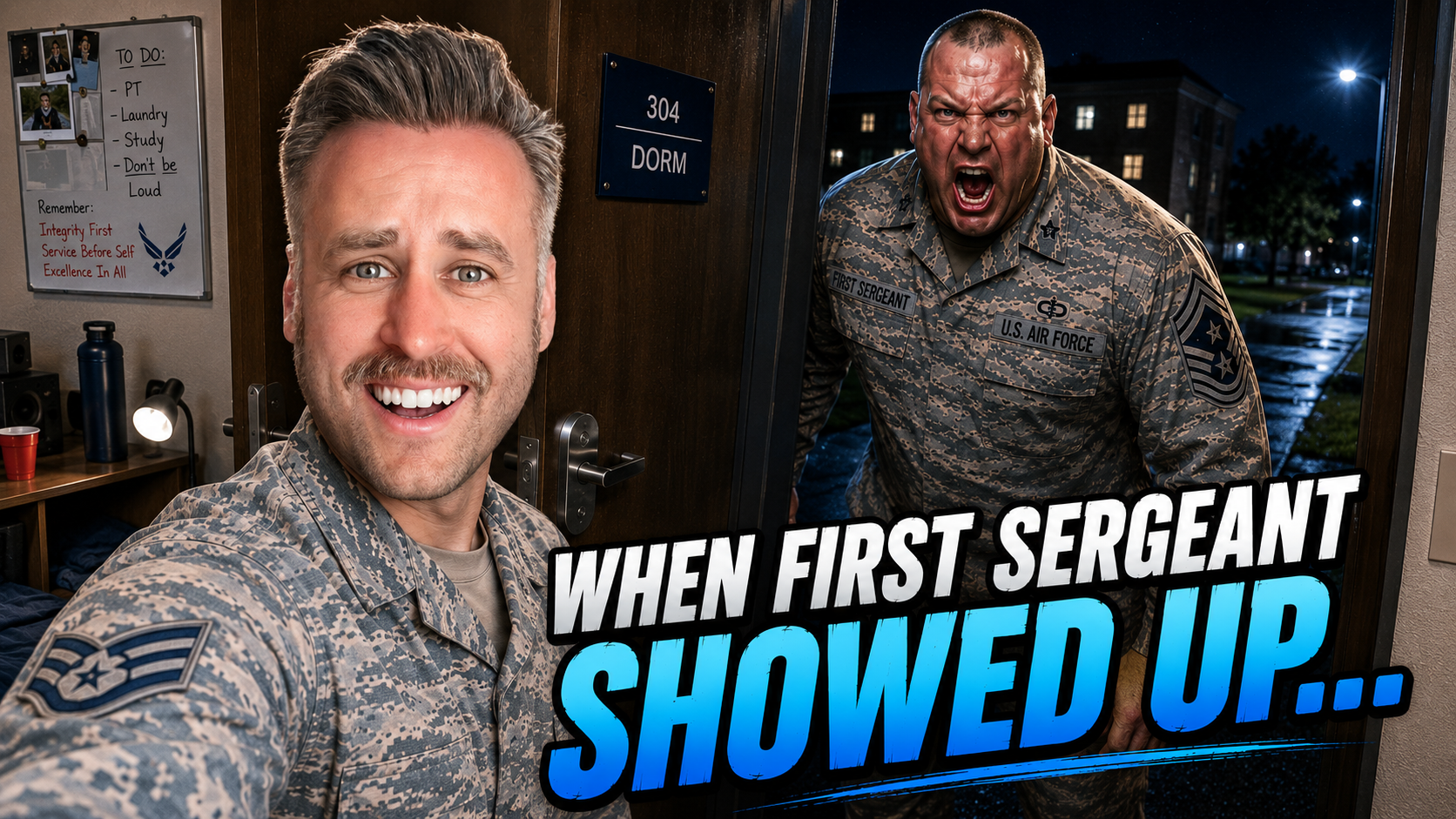
My first duty station was Andersen Air Force Base, Guam in 2005. I was a brand-new maintainer who barely knew what I was doing, still trying to figure out life, the Air Force, and how much trouble a young Airman could realistically get into before it became a career-ending statistic.
For the record, I was determined to find that line and the drinking age being 18 at that time was not helping. I was also a menace to the dorms, the entire base, and possibly the island of Guam itself.
After a week-long base exercise, my suite mate Ronnie and I decided we had “earned” a comp day. And by “earned,” I mean we gave it to ourselves with zero authority, zero coordination, and absolute drunken confidence. It was the best idea we’ve ever had.
Did we tell our supervisor? No. Did we have approval? Also no. Did we still decide Monday was optional? You already know the answer.
Naturally, we made a bad decision even worse.
The night before our self-awarded day off, we held late-night screamo band practice in the dorms (shout out to Faded Memories)… In the middle of the night….While drinking enough to supply a medieval village during a siege. Like the kind of “this is a terrible idea but we’re fully committed now” level of drinking.
Neighbors came by to tell us to turn it down. We told them to go away. Repeatedly. Loudly. With confidence.
Eventually, a random First Sergeant showed up.
Now, if you’ve never seen a room full of junior Airmen instantly turn into a crime scene investigation, it’s impressive. People were hiding under beds, in closets, behind doors, in the bathroom. If there had been ceiling tiles, someone would’ve tried that too.
I opened the door. He walked in, looked around, and calmly told everyone to come out. One by one, like a bunch of very guilty raccoons, everyone crawled out of wherever they were hiding.
And then…he started laughing.
Not a polite chuckle. Not a “you guys are idiots” laugh. A full, can’t-believe-this-is-real kind of laugh and for about three seconds, we thought we had somehow pulled this off. We started laughing too. Because clearly, this was going great for us. We KNEW we were hilarious. This is the best idea ever!
Then he stopped.
“You know you guys are completely screwed, right?”
And just like that, reality showed up like a scene straight out of Lord of The Flies.
The next day, I slept through roughly 20 calls, multiple alarms, and any chance I had at pretending this wasn’t about to get serious. I finally woke up around noon, feeling like death, checked my phone, and saw the message:
“Whenever you get this, put on your service dress and report to the commander’s office.”
There are moments in your life where everything slows down. That was one of them. First duty station. Fourth-generation Airman. And I was pretty sure I had just speedran my way out of the Air Force because of dorm-room screamo.
The commander wanted us gone and honestly, based on the facts, that made sense. I had no excuse.
But our First Sergeant saw it differently. He didn’t see two Airmen who were beyond saving. He saw two young guys who made a dumb decision. The kind of dumb decision that happens when you take one of the youngest workforces in the world from all over the U.S., drop them in a high-pressure environment, mix in freedom, alcohol, and a little bit of “we’ve got this,” and let it play out.
He still held us accountable. We got paperwork, extra duty…We got corrected. We got very clear feedback that what we did was not okay.
But…he also gave us a second chance, and that decision mattered more than he will ever know.
Ronnie went on to become a top maintainer, supervise dozens of Airmen, and make a real impact across the force. He talked fellow Airmen out of suicide, traveled the world, and deployed multiple times. I went on to serve over 20 years, work across three different career fields, become a 12 Outstanding Airman of the Year recipient, and build a military storytelling platform endorsed by the DoD.
Between the two of us, that one decision to save our butts turned into 40 years of service, leadership, and contribution back into the Air Force.
A poor leader sees a mistake and reaches for punishment as fast as possible. It’s clean, It’s easy, It checks a box, and in some strange way they feel they are making a difference by removing people. A good leader still holds the line on standards, but they pause long enough to ask a better question: Is this a pattern, or is this a young Airman making a bad call? They think about the future of the force.
Then they do the harder thing. They mentor, tell stories, get vulnerable, and they correct in ways not obvious to us at the time. And when they see potential, they give that second chance.
I still carry that lesson with me to this day because sometimes, the difference between losing someone and building a leader is one decision, one investment, made by someone who actually cares.
I Didn't Understand 9/11 Until I Was Standing Inside the Impact Site


